


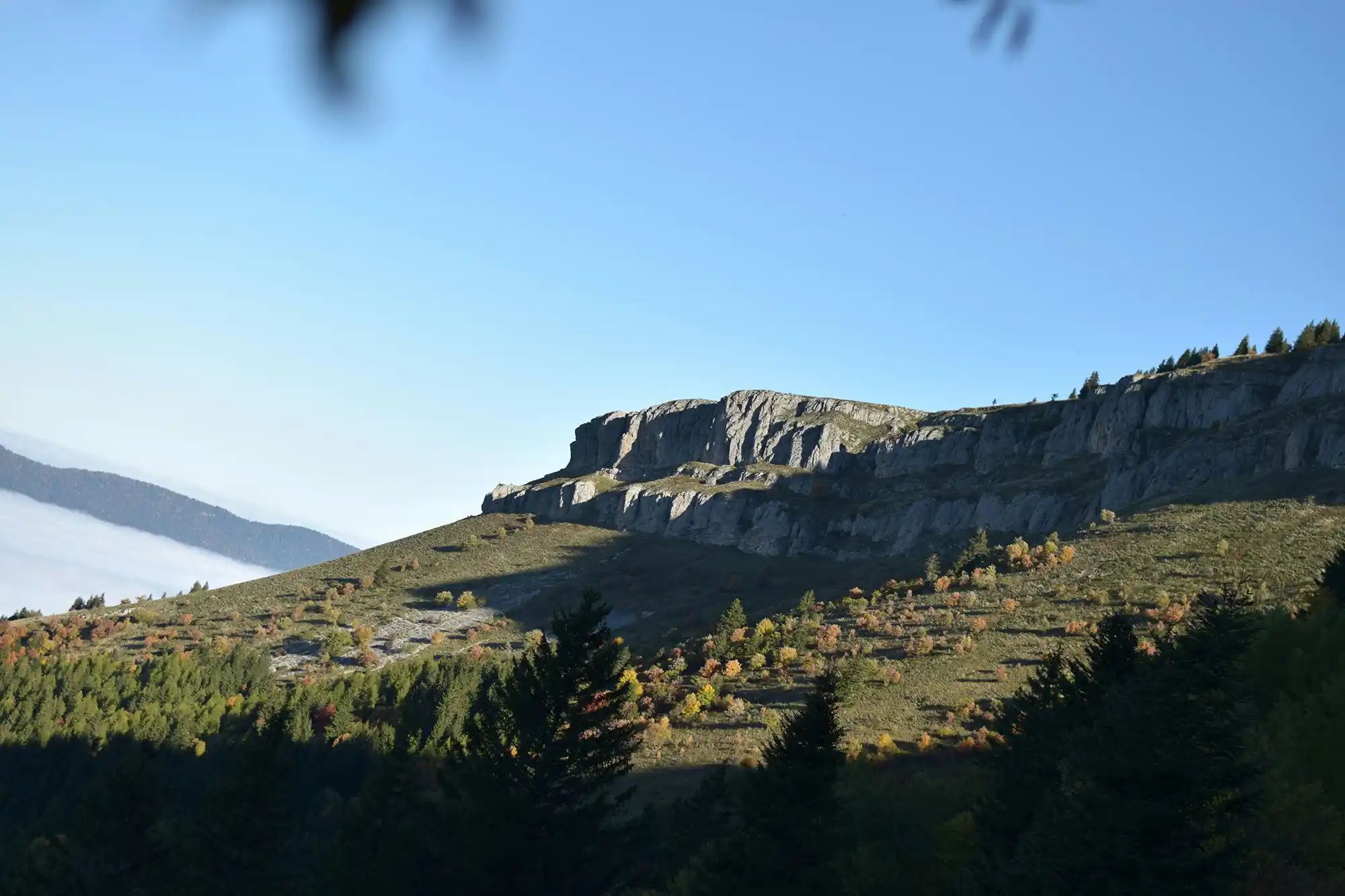

Central Apennines (including Abruzzo Lazio e Molise National Park, Maiella National Park, Sirente Velino Regional Park, Regional Nature Reserves), Italy


Landscape level
Score
A landscape-scale rewilding initiative is linking protected areas through five “coexistence corridors” (>100,000 ha) to reduce human–wildlife conflict and grow a nature-based economy. Targeted measures support the endangered Marsican brown bear and other species, while loans and enterprise programmes develop wildlife watching and local businesses to align livelihoods with conservation.
The Central Apennines host centuries-old beech forests, open hillsides and alpine grasslands with high densities of herbivores and wolves. Traditional mountain farming has declined, creating scope for wilder nature and new income models. Marsican brown bears (50–60 individuals) are relatively safe inside parks but face poaching, poisoning, traffic collisions and conflict outside them, especially around beehives, orchards and livestock. The landscape is a true biodiversity hotspot, home to Marsican brown bears, gray wolves, Apennine chamois, red deer, golden eagles, vultures and a rich set of endemic flora. Large herbivores — including red deer, roe deer and wild boar — are abundant, and in some areas wolf density is thought to be among the highest in Europe. The long-term vision is a connected network of large core rewilding areas with no-take regimes, linked by wildlife corridors and surrounded by zones of sustainable use — where communities benefit from wild nature through tourism alongside high-quality local products such as sheep cheese, mountain flower honey and herbs.


Five corridors link protected areas to enable wildlife movement and reduce conflict. Field actions include traffic-safety measures, electric fencing, bear-proof infrastructure, removal of obsolete barriers and wires, habitat works for aquatic and amphibian species, and enhancement of natural bear foods. Several wildlife watching hides have been planned and developed, and new products are promoted through Rewilding Europe Travel alongside local partner offerings.

Interventions focused on creating “coexistence corridors” that connect protected areas and make it safer and more acceptable for wildlife—especially the Marsican brown bear—to use land beyond national park boundaries. Five corridors were developed, together covering more than 100,000 hectares, linking the national parks of Abruzzo, Molise and Lazio and Majella with the Sirente Velino Regional Park and other protected areas. The approach combined practical conflict-prevention measures, removal of physical barriers to wildlife movement, and local engagement so communities could both reduce damage and benefit from wildlife presence.
Reducing bear mortality and human–bear conflict was implemented through a package of on-the-ground measures delivered with local partners. To lower the risk of traffic collisions, speed limits, road signs and optical systems were installed on roads in relevant areas, alongside restored and improved signage. To reduce damage to property and livestock, conflict-prevention infrastructure was deployed at scale: over 430 electric fences were installed, along with 57 bear-proof waste containers and 63 bear-proof chicken coops and gates. In addition, 534 abandoned fruit trees were pruned to improve natural food availability for bears, reducing pressure on human food sources such as orchards and beehives.
To improve habitat connectivity and reduce injury risks for wildlife, 214 km of abandoned barbed wire were removed and five river barriers were taken out, enabling safer movement through the landscape and across corridor areas. Habitat quality was also addressed through 35 clean-up events organised with local communities.
Implementation relied on locally recruited “bear ambassadors”, who acted as a bridge between project partners and residents. Their tasks included communicating with communities, training landowners, working with livestock owners and other stakeholders, managing camera traps, collecting bear reports, and patrolling to detect bear damage and support checks for poisoning and illegal snares (including support to anti-poison patrols). This local presence was used to address key obstacles identified outside park boundaries—poaching, poisoning, traffic collisions and recurring conflict with beehives, orchards and livestock—by combining prevention infrastructure with monitoring and community engagement.
Additional species and habitat actions were implemented where needed to support wider ecosystem recovery. Two crayfish breeding centres were developed to aid freshwater recovery, followed by releases of 4,000 white-clawed crayfish and 400 Mediterranean trout. Amphibian conservation included two habitat restorations and construction of four underpasses to reduce roadkill. Species recovery and reintroduction actions included releases of Apennine chamois in Sirente-Velino Regional Park (2022) and four additional chamois at other sites, alongside targeted efforts contributing to rising griffon vulture numbers.
Work to scale up rewilding has focused on improving conditions for the Marsican brown bear in strategic communities at the northern edge of Abruzzo National Park. Planned actions include securing a long-term lease of critical habitat to address threats such as poisoning, poaching and disease transmission from livestock. The initiative maintains active collaboration with 16 key partners, formalised through 24 memoranda of understanding and cooperation agreements. Research and learning are supported through 10 agreements with universities, contributing to 17 scientific publications, 13 presentations at international conferences and 25 university theses.
Interventions also focus on improving human-wildlife coexistence and creating economic opportunities linked to rewilding. A key element is the development of “Bear Smart Communities”, where local residents, farmers and businesses work together to reduce conflicts with the endangered Marsican brown bear through prevention measures, improved waste management, livestock protection and awareness activities. In parallel, Rewilding Apennines supports a network of nature-based tourism and food businesses, promoting rewilding-themed visitor experiences, local natural products and partnerships with tour operators.


Information not available yet.