


Sápmi region, northern Sweden — Västerbotten and Norrbotten counties, within the Vindelälven–Juhttátahkka Biosphere Reserve and Råne River catchment


Landscape level
Score
In Sweden’s northernmost boreal forest and peatland landscapes, Rewilding Sweden is restoring ecological connectivity and natural processes across rivers, wetlands, and forests. The work focuses on “blue-green corridors” that align with Sámi reindeer migration routes, supporting keystone species recovery, cultural continuity, and ecosystem resilience. Instead of reintroductions, rewilding here focuses on enhancing existing wildlife populations, restoring hydrology, and revitalising forests and wetlands to unlock the region’s full ecological potential.
The Nordic Taiga — a vast coniferous forest and peatland landscape in Sápmi spanning 15.2 million hectares from mountains to the Baltic coast — is among Europe’s largest wild regions but has suffered heavy ecological degradation from forestry, river damming, and wetland drainage. Within this vast area, Rewilding Sweden focuses on two main zones: the 1.3 million-hectare Vindelälven–Juhttátahkka Biosphere Reserve and the 420,000-hectare Råne River catchment. Despite widespread habitat alteration, the area retains high biodiversity value, intact river systems, and a deep cultural relationship with the Sámi people, whose livelihoods depend on seasonal reindeer migrations through these landscapes.


Rewilding Sweden is implementing a “waterscape” approach to restore ecological connectivity across rivers, wetlands, and forests in the Nordic Taiga landscape. Core actions include removing obsolete small dams and other timber-floating infrastructure to re-enable fish migration and natural sediment and nutrient movement. Riverbed habitats are being rehabilitated by reintroducing sand and gravel and restoring river shape and flow where historical channelisation removed natural features. Parallel work aims to restore drained wetlands and degraded forests, including reconnecting “blue-green corridors” aligned with reindeer migration routes in close collaboration with Sámi herders.

Rewilding Sweden prioritised restoring hydrology and habitat connectivity across rivers, wetlands and adjacent forests using a “waterscape” approach that treats waterways and their surrounding landscapes as an interconnected system. Rather than reintroducing missing species, the interventions were designed to remove constraints on existing wildlife populations by improving habitat quality and connectivity, particularly through “blue-green corridors” linked to waterways and associated drainage systems that support reindeer migration and aquatic biodiversity.
River barriers were removed to re-establish free-flowing conditions and reconnect fragmented waterways. Implementation focused on eliminating physical obstructions to fish movement and restoring natural flow dynamics and sediment transport. Where dam removal risked lowering upstream water levels, stones that had been displaced historically were returned and shaped into natural, tapered thresholds to stabilise water levels and avoid creating overly fast flows that would hinder aquatic species.
In historically channelised rivers, restoration works aimed to reverse simplified channels and rebuild habitat complexity. This included removing legacy structures used for timber floating and returning structural material (stones and boulders) to recreate natural channel forms and rapids. To address the long-term loss of fine sediment, sand and gravel were added by helicopter at multiple points along restored reaches, relying on the river’s natural flow to redistribute material into pockets and backwaters. The intended effect was to accelerate the recovery of bottom-dwelling invertebrates, rebuild food webs, and restore suitable spawning and nursery habitat for fish, with secondary benefits for species such as freshwater pearl mussels that depend on healthy fish populations.
Fish releases were used as a final step after physical habitat improvements, to help re-establish depleted brown trout populations in restored tributaries. Fry were transported from a hatchery, acclimatised to local water conditions and released into low-velocity refuges behind rocks. The intended effects were to rebuild self-sustaining trout populations, restore their role in river food webs, and support the recovery of freshwater pearl mussels by re-establishing host fish needed for mussel reproduction.
In drained forest–wetland mosaics, drainage ditches were plugged to restore natural water tables and re-wet soils. The intended effect was to reinstate wetland and riparian functions and strengthen wider blue-green corridors, improving landscape permeability for wildlife and supporting reindeer movement through a more connected, hydrologically functional landscape.
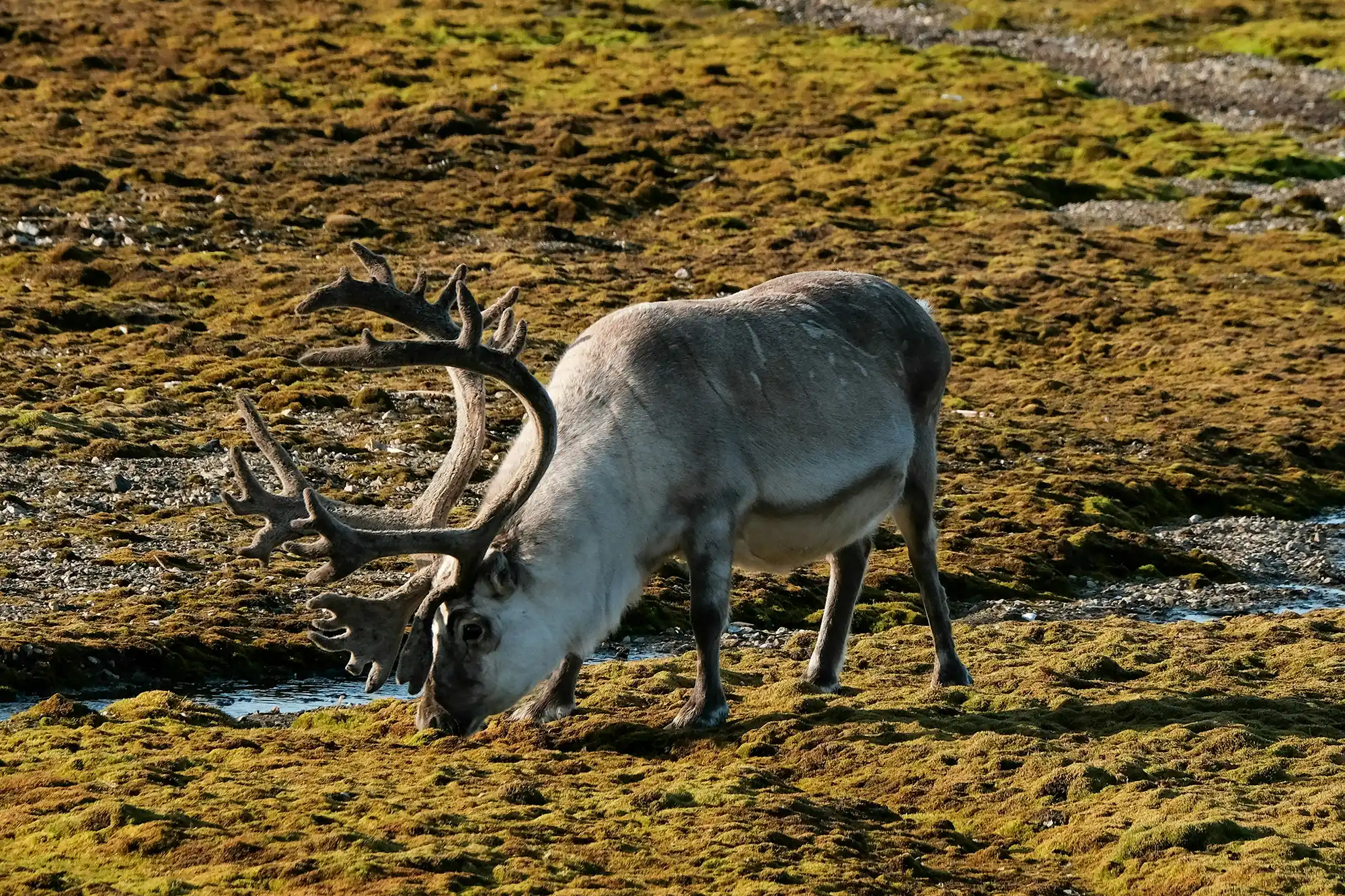
In close collaboration with Sámi communities, priority areas for reindeer migration were identified (63,000 hectares), and more than 1,000 hectares were secured for rewilding, with Enebacken selected as the first intervention site focused on restoring reindeer passage. The practical intent is to improve corridor functionality along waterways and connected landscapes, facilitating movement through fragmented habitats and supporting the ecological role of reindeer grazing. The underlying natural elements emphasised include hydrological connectivity, healthier forest structure, and longer-term recovery of ground lichens that can reduce reliance on supplementary feeding in winter.
Rewilding Sweden is working with local communities, businesses, and research partners to develop nature-based economic opportunities linked to ecological restoration. This includes supporting regenerative tourism initiatives rooted in Sámi values and biosphere collaboration, strengthening local food and forest-product value chains, and building a regional network of enterprises aligned with rewilding principles. Pilot initiatives include collaborations with local retailers and producers to develop rewilding-branded products, the creation of immersive visitor experiences such as rewilding weekends, camps and river events, and partnerships with local stakeholders to develop trails, visitor infrastructure, and place-based tourism around restoration landscapes. At the same time, collaborations with universities and regional initiatives are helping explore new economic models and behavioural pathways that link ecosystem restoration with resilient local livelihoods.


Information not available yet.