


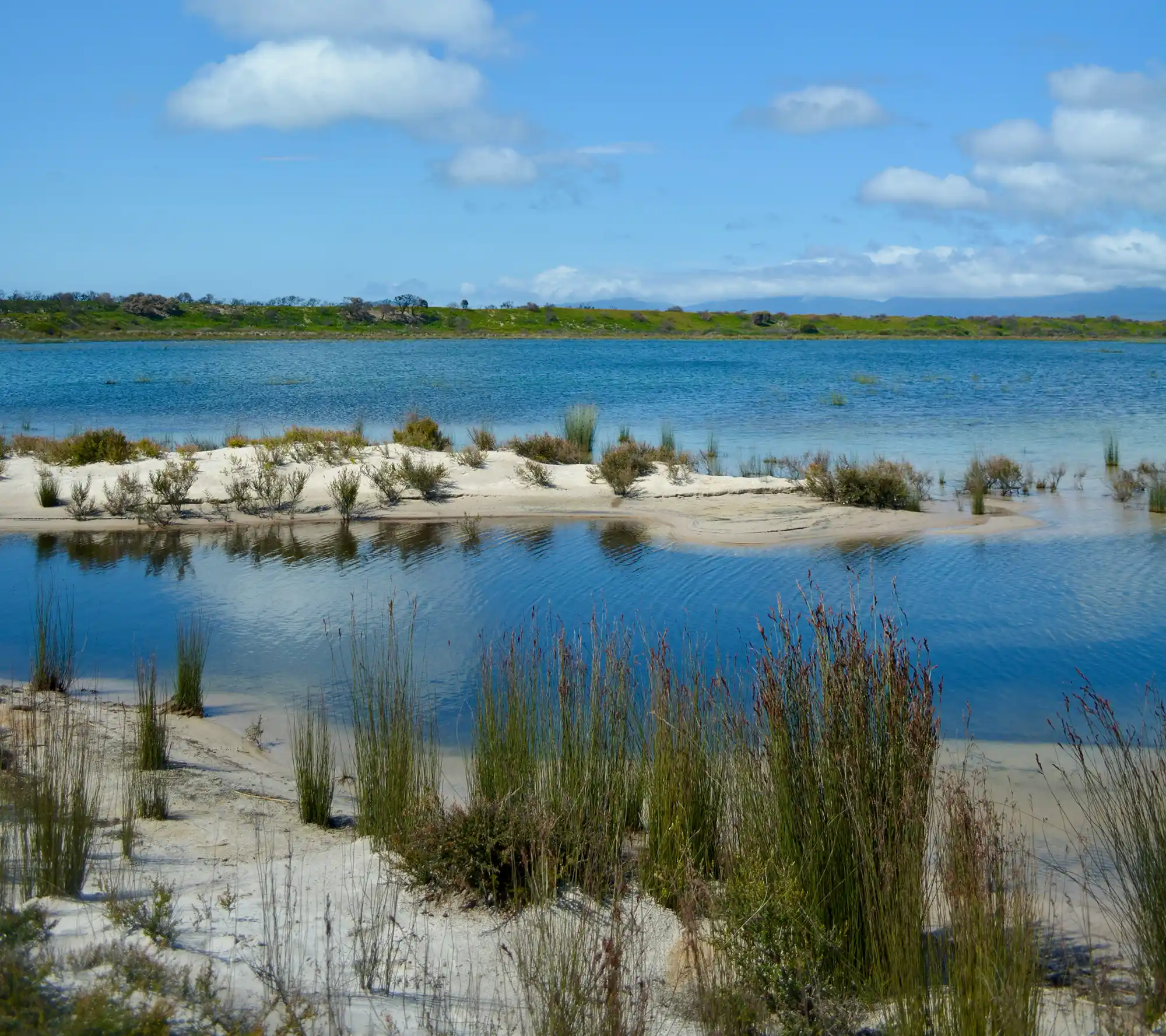
The Maristanis project introduced an integrated governance model and nature-based solutions to protect and restore wetlands in the Gulf of Oristano. By aligning 14 signatories - municipalities and water-management authorities - under the Oristano Coastal Wetlands Contract, the initiative aimed to strengthen biodiversity, reduce climate risks, improve water use efficiency, and balance economic activities such as agriculture, fisheries, aquaculture and tourism.
The Gulf of Oristano is a complex coastal system of rivers, lagoons and salt marshes with high environmental value. It is home to six Ramsar sites, 19 Natura 2000 sites and one Marine Protected Area covering 7,700 hectares along 140 km of coastline. Despite its ecological and socio-economic value, the area faced environmental threats from overexploitation, land-use changes, pollution, invasive species, hydrological alterations, urbanisation, chemical inputs from agriculture, and suffered from fragmented governance across its 11 municipalities. Additionally, climate risks include marine storms and torrential rain causing inland flooding, as well as prolonged summer heatwaves, drought and unpredictable rainfall patterns. Key economic activities such as artisanal fishing, agriculture and tourism often conflicted with conservation needs. The lack of unified management, weak vertical integration with regional and national governance, and limited financial and technical resources led to ineffective and reactive management of wetlands, undermining biodiversity, ecosystem health, and climate resilience.


The intervention combined ecological restoration, innovative water management, and a new governance framework. Key actions included riparian strip renaturalisation, creation of a bird nesting island from mussel shell by-products, and precision agriculture pilots using drones, satellites, and irrigation technologies. Governance was formalised through the Oristano Coastal Wetlands Contract, aligning 11 municipalities with shared objectives, strategies, and action plans. Stakeholder engagement was central, involving schools, associations, businesses, and public authorities, to ensure local support and sustainable outcomes.

Implementation combined a governance-led integrated management model with targeted restoration and resource-efficiency actions across the coastal wetlands of the Gulf of Oristano. Activities were coordinated under the Maristanis project, led by the MEDSEA Foundation, and spanned governance, restoration (marine and terrestrial), water use and quality, and engagement of agricultural and fishing interests.
Integrated governance through the Oristano Coastal Wetlands Contract
A central intervention was the creation of a joint decision-making framework among the 11 municipalities that include six Ramsar sites and 19 Natura 2000 sites. The municipalities signed a cooperation agreement in the form of the Oristano Coastal Wetlands Contract, grounded in Italian legislation for river contracts (Article 68-bis, Legislative Decree 152/2006). The Contract set shared strategies, guidelines and actions and was used to steer intended outcomes, implementation actions, and monitoring and evaluation. An Action Plan attached to the Contract summarised planned actions (funded and unfunded) addressing priority themes including restoration, climate change, water quality, hydrological risk, and cultural and landscape promotion and valorisation. The governance approach explicitly sought to overcome fragmented wetland management and to progress towards establishing a new regional park as the first objective of the Action Plan.
To deliver this, the project supported a Coastal Contract Technical Secretariat, which accompanied municipalities through the administrative and technical procedures needed to define strategic objectives and actions under the Contract. MEDSEA acted as an ‘honest broker’, working with existing local dynamics rather than imposing new hierarchical structures. A Local Consultation Group was established, bringing together the 11 municipalities, the Province of Oristano, and the Sardinia Regional Administration, and convened multiple meetings with project partners and stakeholders.
Monitoring and evidence-based decision support
To support evidence-based decisions, a Local Wetland Observatory (LWO) is referenced as a mechanism to monitor wetland status and support decision-making. Additional planning and evidence tools developed during delivery include a vulnerability map to visualise impacts and priority areas for mitigation measures, and a map of landscape and cultural heritage drawing on the Regional Landscape Plan database and site data.
Stakeholder engagement and awareness-raising were embedded throughout implementation. Stakeholders were identified through a stakeholder analysis and consulted from relevant public and private sectors, including agriculture, fisheries, tourism and environmental associations. More than 400 stakeholders were involved directly or indirectly. As part of the formal participation process, more than 70 stakeholders took part in nine official meetings presenting the Coastal Wetlands Contract and the opportunities linked to the planned regional park. Engagement methods included individual meetings and public meetings. Schools were engaged through activities linked to World Wetlands Day and Coast Day, including clean-ups, training events, competitions and an educational kit.
Restoration and species support actions
On-the-ground restoration included renaturalisation and restoration of a riparian strip at the Sal’e Porcus pond. This intervention aimed to thicken vegetation along the pond banks to create a filter zone between agricultural land and higher-nature-value areas, improving habitat health and reducing fragmentation. The area benefiting from restoration measures was estimated at about 600 hectares.
A species support measure was the construction of an artificial nesting island for seabirds (terns and laryngites) using waste products from mussel farming. The island had a surface area of 110 m² and incorporated 143 m³ of mussels placed into 1,100 jute sacks. The project identified that outcomes for this nesting support depend on external conditions not directly controlled by the intervention, and that constant monitoring is necessary to adjust or improve the measure.
Precision agriculture to reduce water and input use
A suite of pilot precision agriculture measures was developed to reduce water consumption and other inputs including fertilisers, herbicides and pesticides. Several technologies were tested, with the most successful pilot described as the use of drones to map soils and assess water and input requirements. Precision agriculture measures were tested on more than 200 hectares, mainly using drones on maize and rice cultivation. Additional irrigation-efficiency trials included sub-irrigation technologies tested on 9 hectares of (organic) artichokes and strawberries, and surface micro-irrigation on 3 hectares of carrots. A separate precision agriculture initiative using satellites was developed over 5,000 hectares, mainly for maize cultivated as cattle feed. Reported results from irrigation guided by drone-collected data indicated around 30% water savings and reduced fertiliser use, with the approach described as particularly cost-effective per hectare for large croplands and water-intensive crops such as maize and rice.
Strengthening implementation through self-assessment and corrective actions
During implementation, the project applied a self-assessment using the IUCN Global Standard for Nature-based Solutions to identify where delivery could be strengthened. The analysis was carried out by UNEP/MAP SCP/RAC, supported by a consultant from the IUCN Commission on Ecosystem Management. The assessment was used to identify indicators that were insufficiently addressed and to generate concrete recommendations and corrective actions for the remaining project period, including prioritising a formal, clear, and well-documented feedback and grievance mechanism and reinforcing participatory decision-making processes that respect stakeholder rights and interests.


Information not available yet.