



Danube Delta and surrounding steppe zones at the Danube–Black Sea confluence, spanning Romania, Ukraine, and Moldova

Ongoing implementation

Landscape level
Score
At Europe’s largest wetland – the 580,000-hectare Danube Delta – rewilding efforts are restoring natural hydrological dynamics, reviving floodplains and steppes, reintroducing large herbivores, and fostering a nature-based economy across three countries. Projects reconnect lakes and rivers, rebuild natural grazing systems, and support biodiversity recovery, including pelicans, sturgeon, and steppe mammals. Rewilding initiatives are also strengthening local livelihoods, eco-tourism, and community engagement while contributing to post-war recovery in Ukraine.
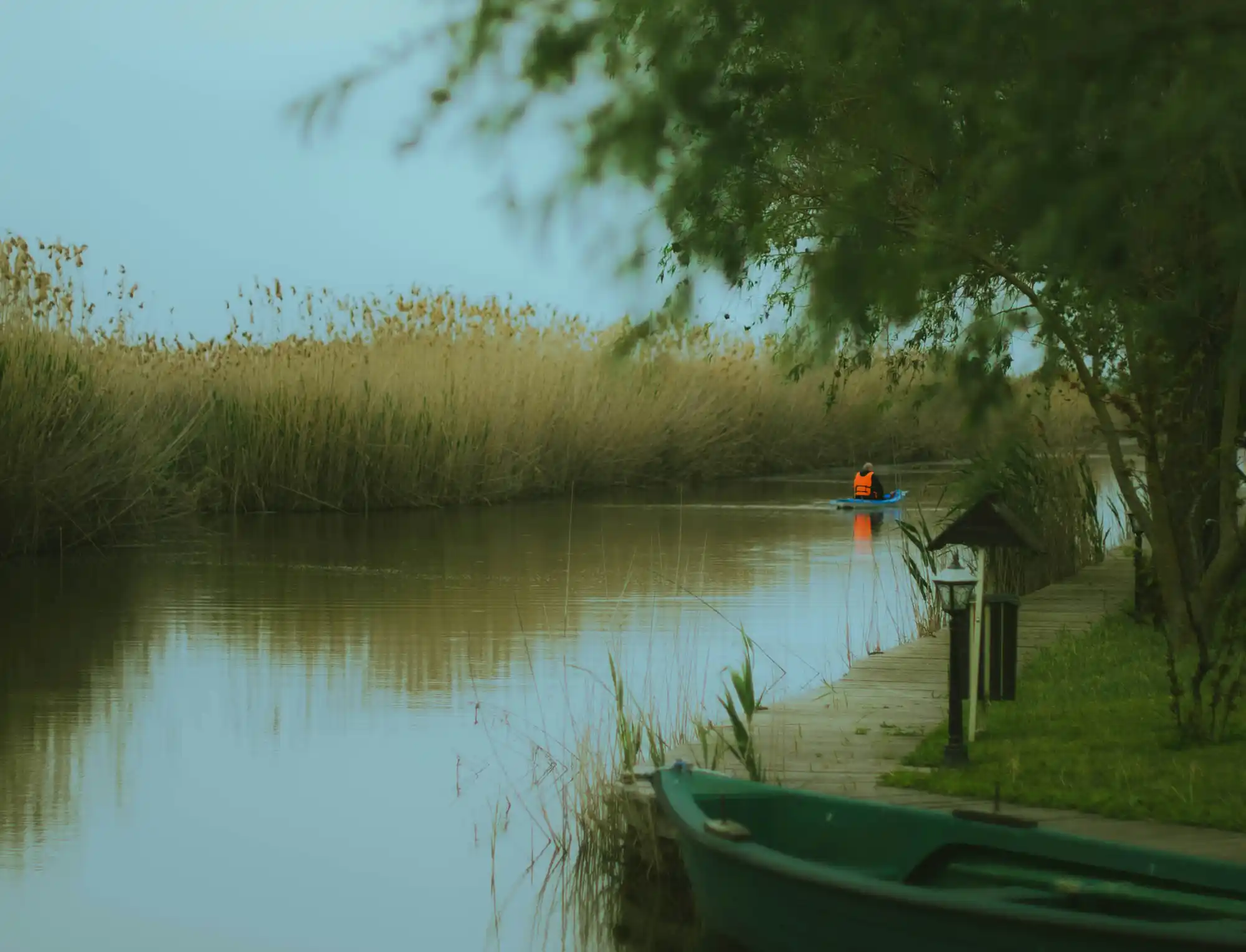
Where the Danube meets the Black Sea, vast wetlands, forests, and steppes form a transboundary ecosystem of exceptional productivity and biodiversity. The delta is home to massive numbers of waterbirds of all kinds, most notably pelicans of two species, as well as herons, storks, cormorants, and terns. It is a favourite staging area for passage migrants and also wintering grounds for masses of migrating waterbirds from the steppes, boreal forests, and tundras further north. Under the surface, the delta’s watery abundance supports Europe’s highest diversity of fish species, with sturgeon included as a flagship species. The delta also supports some of the last grazed forest mosaics. Following drainage, damming, and agricultural conversion in the 20th century, rewilding now leverages restoration of former polders and lakes, natural grazing, and community-based conservation to re-establish natural processes and sustainable economies.


The Danube Delta rewilding programme restores hydrological and ecological processes across wetlands, lakes, and steppes. It reconnects river systems, reintroduces grazers and key species, and builds resilience through natural flooding, grazing, and predation. Rewilding also reconnects people to nature through education, rehabilitation, and nature-based tourism, strengthening post-war recovery and community well-being.

Implementation focused on restoring key natural dynamics across wetland, steppe and forest mosaics in the Danube Delta rewilding landscape (Ukraine, Romania and Moldova), with flooding and natural grazing treated as the primary “drivers of change” at landscape scale.
Wetland reconnection and reflooding focused on reinstating water exchange between the Danube and formerly isolated lakes, marshes and former polders. On the Ukrainian side, work in 2022 concentrated on restoring water flow and flood dynamics on Ermakiv Island and the Danube lakes, including removing approximately 300 metres of dyke on Ermakiv Island. Lake Katlabuh, historically separated from the river in the 1960s by a dyke and sluices and subsequently affected by falling water levels and stagnation, was targeted for reconnection by re-establishing regular water exchange with the Danube and surrounding area. This intervention was intended to reduce salinity, increase and diversify fish stocks, and support local farmers and fishermen. Similar connectivity restoration works were undertaken at Lake Kartal and adjacent wetlands, with reported improvements in water levels and ecosystem condition alongside provision of water resources to local people. Additional lake and wetland revitalisation is described through restored Danube connections for Kartal, Katlabuh and Kugurlui lakes and adjacent wetlands, and restored flows in the Stensivsko-Zhebriansky wetlands, complementing earlier reflooding and restoration on Ermakiv Island. From a technical standpoint, the approach is described as removing obsolete hydraulic barriers (dams and dykes), renewing or cleaning channels, and undertaking other hydraulic works. In the upper Sasik Lagoon catchments, ten dams and other obstacles were removed from the Kogilnyk, Kagach and Sarata rivers to re-establish river connectivity and flow.
Steppe restoration centred on repairing and re-establishing functioning steppe processes on the Tarutino Steppe (5,200 hectares), including reversing damage from illegal ploughing and reintroducing grazing and key prey species. More than 500 hectares that had been illegally ploughed were restored, with further areas under restoration using methods developed by scientists from Askania-Nova. The rewilding team continued active management from 2019 onwards, with 2022 efforts including releasing herds of fallow deer and kulan (Asiatic wild ass) to restore natural grazing and diversify herbivory. The Tarutino Steppe is described as hosting the last free-ranging kulan herd in Europe, and a foal born in early spring 2022 is noted as the first free-roaming kulan birth in Ukraine in over 200 years. To strengthen steppe food webs and trophic functioning, reintroduction programmes for small rodents were initiated: steppe marmots released in 2021 reproduced in 2022, and European hamsters were released in December 2022, with further releases planned. A scientific collaboration also initiated a study on carbon uptake and storage potential of dry grassland ecosystems, focusing on Tarutino and the Askania Nova Biosphere Reserve, and a further study assessed steppes’ capacity to absorb and retain carbon and their potential economic relevance for carbon markets.
Large herbivores were reintroduced across wetland and steppe sites to reinstate natural grazing, maintain open habitats, create structural diversity and reduce wildfire risk. In delta landscapes, water buffalo, red and fallow deer, semi-wild horses and kulan were released, with animals described as naturally increasing in number. Specific delta islands where grazing animals were returned include Ermakiv, Small Tataru and Bilhorodsky, with water buffalo, fallow deer, red deer and wild horses reintroduced. The functional rationale is linked to ecological processes: large grazers maintaining meadows and mosaic habitats; water buffalo opening scrub and reedbeds and creating small pools and puddles; and grazing and trampling supporting diverse plant and insect communities.
Species support measures complemented process restoration. For Dalmatian pelicans, activities under the Pelican Way of LIFE initiative (2019–2024) in the Danube Delta included research and monitoring, construction of artificial nesting platforms in multiple locations, and public awareness and education; habitat improvement was also linked to restoring natural water flow. Predator restoration is described through an ongoing eagle owl reintroduction programme intended to restore trophic functions.
Forest restoration actions are described for the Zhebriyansky Ridge within the Danube Biosphere Reserve, where pine plantations established decades earlier are planned to be replaced with indigenous forest species, with the aim of increasing resilience to fire and drought and restoring dunes to a more open condition to enhance floral diversity.
Implementation took place through a partnership model, with Rewilding Europe working with local partners and supporting the establishment of Rewilding Ukraine and Rewilding Romania to implement activities on both sides of the delta. Local communities also played direct roles in site-based initiatives, including the community of Orlovka working with an NGO to create Eco-park Kartal (summer 2017) near Kartal Lake, and local community support for developing Eco-park Tarutino on restored steppe territories. Eco-tourism infrastructure was developed on Ermakiv Island and the Tarutino Steppe, including a wildlife-watching tower, eco-trails, interpretive panels and an observation hide, positioned to build a nature-based economy on previously restored ecosystems.
Key implementation obstacles were linked to the ongoing war in Ukraine, which created logistical, staffing and access constraints. The text notes that half the Rewilding Ukraine team relocated abroad and that much of the outer Ukrainian delta where animals were released became off-limits, leading the team to focus on interventions that could still be delivered with partners. Co-existence measures were also introduced in Vylkove to increase local acceptance of returning wildlife, particularly fallow and red deer.


Information not available yet.