
Hide panel
Ecosystem type
Select
Thank you! Your submission has been received!
Oops! Something went wrong while submitting the form.
Land-use challenge
Select
Thank you! Your submission has been received!
Oops! Something went wrong while submitting the form.
NbS approach
Select
Thank you! Your submission has been received!
Oops! Something went wrong while submitting the form.
Clear allAbout the libraryGuide
Other
Biodiversity loss
Ecosystems restoration

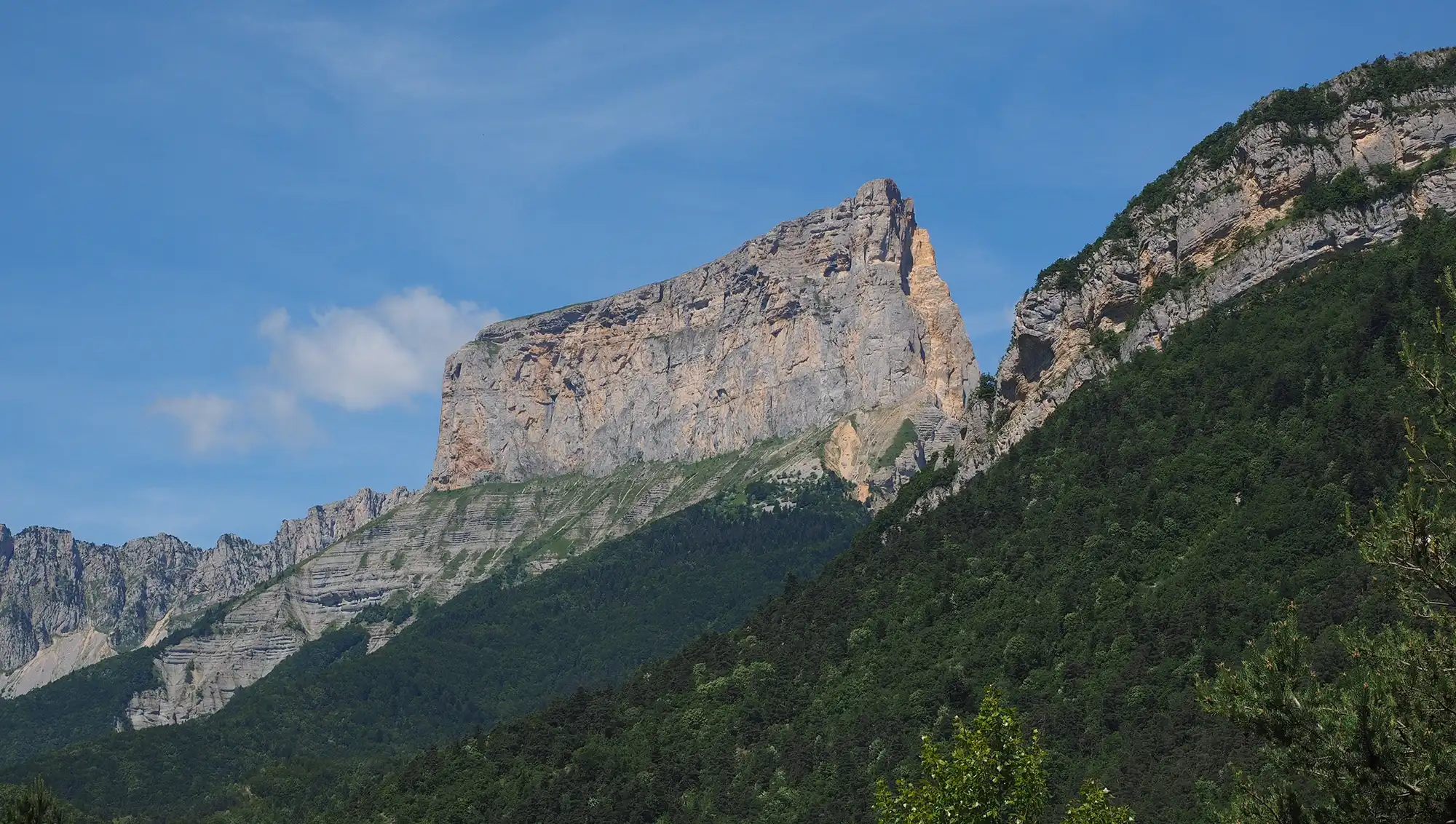
Forest, River, and Grazing Rewilding in the Dauphiné Alps, France

Location

Dauphiné Alps, southeastern France — including Vercors and Baronnies Provençales Regional Natural Parks

Status

Ongoing implementation

Scale

Landscape level

A large-scale rewilding initiative in the Dauphiné Alps is responding to climate pressures on forests and rivers and to long-term rural depopulation by restoring natural processes. The programme focuses on protecting and improving forest structure, restoring river connectivity and floodplain function, and reintroducing semi-wild grazers to maintain biodiversity-rich, wildfire-resistant habitat mosaics.

The Dauphiné Alps contain extensive forests, semi-wooded scrubland, mountain meadows, cliffs, and some of France’s most important remaining braided river sections, alongside a long farming and rural cultural heritage. Since the nineteenth century, population decline and reduced hillside farming have allowed natural forest recovery, but these mixed-forest mosaics are increasingly stressed by climate change-driven heatwaves and droughts. River systems, including braided sections on the Drôme, Eygues, and Buech, are also affected by worsening heat and drought conditions. The area supports diverse wildlife, including deer, wild boar, chamois, Alpine ibex, wolves, beavers, otters, marmots, and all four European vulture species, creating both ecological opportunity and a need for long-term co-existence approaches.

Highlights

  • Approximately 480,000 hectares targeted under the rewilding initiative (largest rewilding initiative in France to date).
  • Protecting and restoring forests by establishing “old wood networks” where forest areas are left to evolve freely without timber extraction.
  • Setting up conservation easements with city councils (communal forests) and private landowners to support rewilding-aligned forest management.
  • Improving forest climate resilience and biodiversity through closer-to-nature management that increases older, larger trees and deadwood.
  • Restoring rivers by removing unnecessary barriers, reconnecting riverbeds with floodplains, and restoring headwaters, wetlands, and hydrological zones to support groundwater recharge and flood absorption.
  • Building a coalition for river restoration and pursuing the Rivières Sauvage label to demonstrate ecological and economic benefits (including sport fishing tourism).
  • Boosting natural grazing by reintroducing semi-wild horses and bovines on land no longer used for agriculture to maintain open habitat mosaics and reduce wildfire risk.

Timeline

  • Information not available.

About the intervention

The initiative applies a landscape-scale rewilding approach across approximately 480,000 hectares to restore key natural processes in forests, rivers, and open habitat mosaics. It establishes “old wood networks” and promotes closer-to-nature forestry to increase structural diversity and deadwood, supporting wildlife and climate resilience. It plans river restoration actions such as barrier removal and floodplain reconnection to improve hydrological function and resilience to floods and droughts. It also aims to reintroduce semi-wild horses and bovines to provide natural grazing that maintains biodiversity-rich mosaics and helps reduce wildfire risk.

Intervention details

Forest rewilding and protection is being advanced through the creation of “old wood networks”, combining forest areas left to develop without timber extraction, old-growth islands, and increased standing and fallen deadwood. Alongside this, closer-to-nature forest management is being used to shift forests towards more diverse stands with older and larger trees, with the stated aim of improving wildlife populations and climate resilience.

The programme also targets biodiversity and climate value improvements in younger forests that regenerated naturally after rural depopulation in the nineteenth and twentieth centuries (“feral forests”). To secure long-term delivery, conservation easements are being established for communal forests via city councils and also with private landowners. River rewilding is planned through removal of unnecessary barriers, reconnection of riverbeds with floodplains, and restoration of headwaters, wetlands, and associated hydrological zones. These actions are intended to increase groundwater recharge and flood absorption, strengthening resilience to climate change and helping mitigate flood and drought impacts for residents and businesses. A key enabling strategy is coalition-building in favour of river restoration, including seeking certification of rivers under the Rivières Sauvage label. The programme also intends to demonstrate the ecological rationale for barrier removal (connectivity for fish and other wildlife) and to highlight co-existence practices with aquatic mammals such as beavers and otters, while also pointing to potential economic co-benefits such as sport fishing tourism. Natural grazing interventions aim to address low levels of large wild grazer pressure in habitat mosaics and feral forests, which can otherwise allow shrub encroachment.

The initiative plans reintroductions of semi-wild horses (including Konik horses) and bovines (including Tauros and Galloway cattle), particularly on land no longer used for agriculture. This grazing is intended to help maintain and restore biodiversity-rich habitat mosaics described as more wildfire-resistant, support climate resilience, and provide a cost-effective, nature-based option for landowners. The programme frames this as an approach that can simultaneously support biodiversity improvement and reduce wildfire risk in a context of increasing climate-driven extremes.

Key stakeholders

  • Rewilding France
  • City councils
  • Private forest owners and farmers
  • Vercors and Baronnies Provençales Regional Natural Parks
  • Local people, entrepreneurs and nature-based businesses
  • Rewilding-aligned communities and tourism operators.

Financial metrics

Funding sources

  • Rewilding Europe
  • Rewilding France
  • Arcadia
  • Cartier for Nature
  • Fondation Alpes Sauvages
  • Fondation Lemarchand
  • The Ecological Restoration Fund
  • WWF-Netherlands
  • OAK Foundation
  • The Dutch Postcode Lottery

Budget

  • Information not available

Outcomes

Environmental

  • Forests: Establishment of “old wood networks” of non-managed forest patches with higher biodiversity, more deadwood, and better carbon storage; increased climate resilience.
  • Rivers: Planned barrier removal and floodplain reconnection; improved connectivity for fish, beavers, and otters; enhanced groundwater recharge and flood control.
  • Grazing: Reintroduction of natural grazers to sustain biodiversity-rich mosaics, prevent shrub encroachment, and reduce wildfire risk.
  • Wildlife: Continued recovery of herbivores, predators, and scavengers (deer, wolves, vultures, ibex, otters, beavers).

Social

  • Partnerships with municipal councils, private forest owners, farmers, and rewilding-aligned entrepreneurs.
  • Dialogue and shared decision-making around forest and river management.
  • Development of a local identity linked to wild nature, attracting new residents and visitors.
  • Increased awareness of nature’s role in climate adaptation and regional pride in biodiversity.

Economic

  • Creation of a sustainable nature-based economy through collaboration with local businesses and forest owners.
  • Expected benefits from eco-tourism, nature guiding, and sport fishing linked to restored rivers and wildlife watching.
  • Nature-based land management (natural grazing) offers cost-effective wildfire prevention.
  • Quantified revenues and employment outcomes: [Information not available.]

Risks and considerations

  • Climate change-driven heatwaves and droughts are increasing pressure on forest mosaics and river systems.
  • Long-term success depends on sustained dialogue and shared decision-making with communities and land managers.

Lessons learned

  • Feral forests created by land abandonment can be enhanced for biodiversity and climate value through rewilding-aligned management and protection mechanisms (easements/old wood networks).
  • Making ecological and economic benefits visible (e.g., river connectivity, groundwater recharge/flood absorption, sport fishing tourism, and wildfire-risk reduction via natural grazing) can help build coalitions for restoration.

Sources

For Reference

  1. Rewilding Europe, Dauphiné Alps, 2025.

Related EU projects

Information not available yet.