


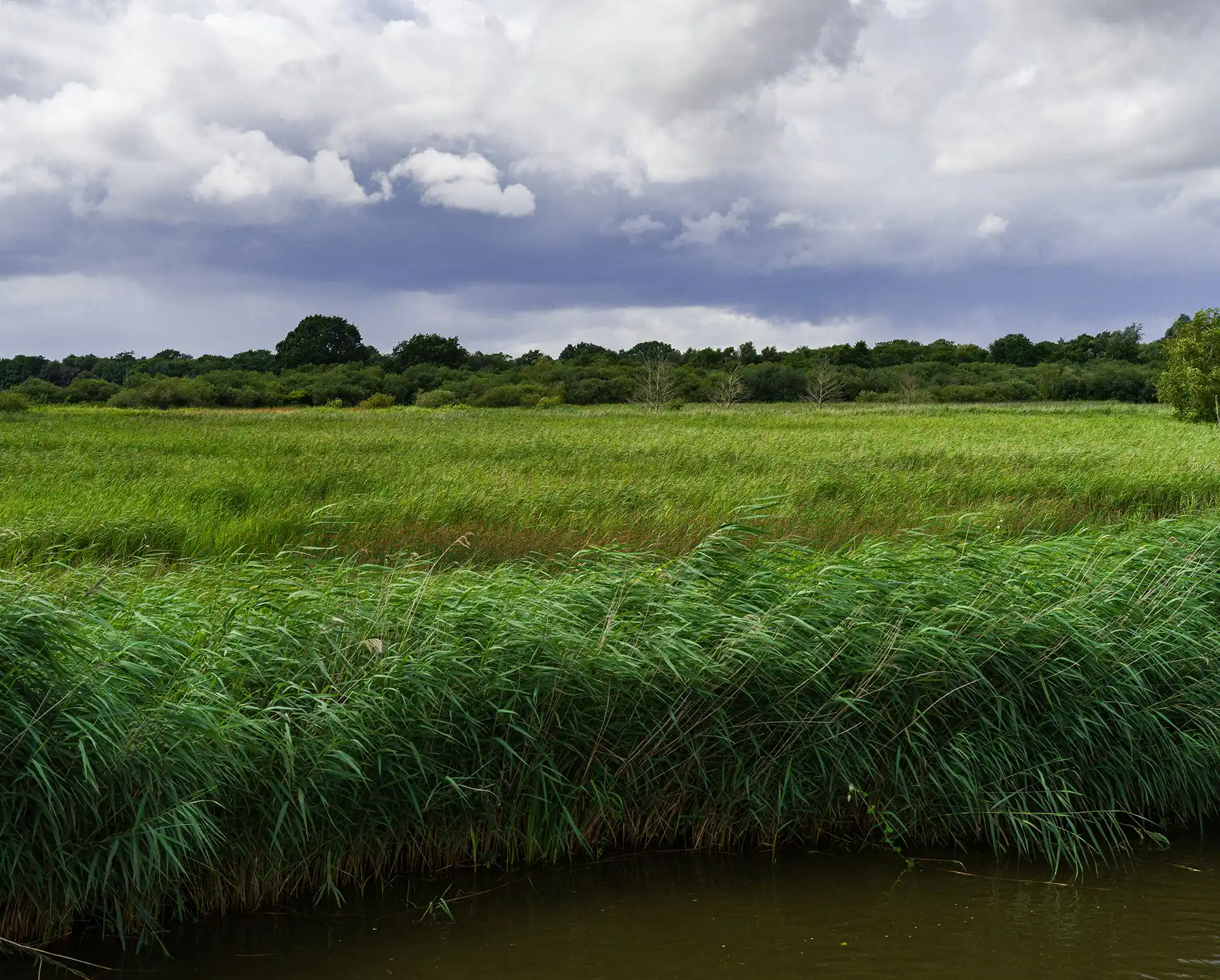

Malchin and Lake Kummerow, Mecklenburg-Vorpommern, Germany

Project ended

Local level
Score
Since June 2014, Malchin’s district heating has integrated an 800 kW biomass boiler fuelled by hay from rewetted fen meadows, supplying base and medium heat loads to 540 households plus public buildings. The scheme replaces natural gas with locally harvested reed canary grass and sedges from ~300 ha, cutting emissions, sustaining post-rewetting land use, and demonstrating peat-friendly bioenergy.
The Peene valley (17,810 ha peatlands) was largely rewetted in the 1990s, changing grassland vegetation and undermining its fodder value for cattle. An R&D project between local farmers and University of Greifswald showed that hay from wet meadows could be used as solid fuel, enabling continued agricultural use while protecting peat. The nearby town’s existing gas grid allowed integration of an adapted herbaceous-biomass boiler.


An adapted biomass boiler (Lin-Ka HE 800) was installed within Malchin’s gas district-heating plant, fueled with hay harvested from rewetted fens. Annual summer biomass harvesting of reed canary grass (June–September) supplies local baled biomass to the plant. The gas boiler covers peaks and downtime in heat supply, ensuring reliable heat.

The intervention centred on creating a reliable value chain that links re-wetted fen management with district heat supply in Malchin, by replacing part of an existing natural-gas-based system with a boiler able to combust herbaceous biomass from wet meadows.
Large areas of fen in the Peene valley had been rewetted in the 1990s. On the wet fen meadows at Lake Kummerow, this changed vegetation composition and reduced fodder suitability for cattle, requiring alternative land use. In an R&D collaboration with the University of Greifswald, the thermal use of this wet-meadow biomass as solid fuel was tested and identified as a promising option. The short distance between the harvesting areas and Malchin’s existing district heating network (about 12 km) facilitated further this type of local biomass use. Local farmer Hans Voigt then convened relevant local actors to implement the concept.
Biomass production was organised on approximately 300 ha of wet fen meadows at Lake Kummerow, and dominated by reed canary grass and sedges. The harvested biomass was used to fuel a modified LIN-KA HE 800 boiler (800 kW) installed within the existing natural gas heating plant serving Malchin’s district heating network. The biomass boiler did not replace the existing gas plant. It supplied base and medium heat loads, with gas being still used to cover peak demand and downtime/maintenance periods. Biomass-based heat production reached >4,000 MWh/year, requiring biomass demand of about 1,200 t.
Biomass harvest was carried out once per year between June and September, specifically during dry summer periods when the wet meadows were trafficable; harvestability was therefore weather-dependent. To reduce ground pressure on wet soils, adapted grassland machinery was used, including light tractors with wide tyres and a light fixed-chamber round baler. Harvesting operations comprised mowing, tedding, windrowing, baling, and single/double bale retrieval.
Harvested biomass was processed into round bales containing 185–200 kg dry matter. The harvest supplied 800–1,200 t of fuel annually (approximately 5000 bales), with an energy yield of ~15 GJ per tonne of fresh matter (15% water content). This corresponds to around 350,000 litres of fossil heating oil. Biomass was harvested locally, approximately 12 km away from the heating plant.
Because herbaceous fen biomass has higher ash content and can contain polluting compounds (e.g. chlorine, sulphur and nitrogen) compared to wood, the intervention required adapted combustion and installation of flue-gas cleaning technologies. The installed system included a water-cooled, movable step grate combustion system to prevent slag and ash deposits, long residence times and exhaust gas recirculation to reduce harmful emissions, and dust removal via a multi-cyclone system with a downstream fabric filter. At the plant, bales were fed continuously using a conveyor belt system, with capacity for 24 bales. In winter, feeding was carried out daily. Bales were shredded; the loose stalks were conveyed via a double worm feeder and screw stoker into the combustion chamber, and ash was removed automatically. The boiler could also use straw and, with a separate feeder, wood chips.
Implementation relied on cooperation with local stakeholders, from local farmers, to energy providers, to municipal bodies. Biomass was produced by local farmers; plant operation was carried out by Agrotherm GmbH Schwinkendorf; energy was distributed by local energy supplier Energicos Malchin GmbH; and the City of Malchin and WOGEMA operated distribution to final users (including households and public buildings, such as a kindergarten/day-care facility and schools). Scientific monitoring involved the University of Greifswald and local organisations (DUENE e.V. and Förderverein “Naturschutz im Peenetal” e.V.).
The implementation of this nature based solution faced two main challenges. First, variable harvest conditions on wet fen meadows implied reduction of biomass availability in particularly wet years; this was managed by retaining the natural gas boiler for peak and downtime coverage and by enabling the biomass boiler to use alternative fuels (including wood chips) to maintain supply reliability. Second, combustion of herbaceous biomass posed technical challenges due to ash and corrosive/critical constituents. These were addressed through boiler modifications and specific combustion and filtration systems (movable grate, corrosion protection measures, and multi-stage dust filtration). The plant was commissioned in June 2014 after a reported construction period of six months.


Information not available yet.